
When our installation teams remove a shower surround in a King County home, they find mold behind the walls in approximately 40% of cases. Not surface mold. Structural mold that has been growing inside the wall cavity, invisible to the homeowner, sometimes for years.
This number surprises most people. It shouldn't. Seattle is one of the worst climates in the United States for bathroom mold, and the way most bathrooms are built — with traditional tile and grout — is essentially an invitation for the problem.
The Seattle Mold Reality
40% of shower surround demolitions in King County reveal structural mold behind the walls — invisible to homeowners, often growing for years before discovery.
Why Seattle Is a High-Risk Environment for Bathroom Mold
Mold needs three things to grow: moisture, organic material, and moderate temperatures. Bathrooms reliably provide all three, and Seattle's climate amplifies each factor significantly:
Persistent Humidity
Greater Seattle averages over 150 days of precipitation annually. Outdoor humidity is consistently high from October through April, meaning the air entering homes is already moisture-laden.
Temperature Range
Pacific Northwest temperatures rarely get hot enough to dry out moisture completely or cold enough to kill mold spores. The 45°F to 75°F range is nearly ideal for mold growth year-round.
Older Housing Stock
King County has many homes built in the 1960s through 1990s with original tile surrounds, inadequate waterproofing membranes, and undersized exhaust fans.
How Mold Grows in Your Bathroom (and Why You Can't See It)
The misconception most homeowners carry is that bathroom mold is what you can see: dark spots on grout lines, discoloration in the corner of the shower. That surface mold is real, but it is the symptom, not the source. The more serious problem begins where you can't see it.
Condensation and Initial Penetration
Month 1-6Moisture finds its way through grout lines and microscopic gaps where grout meets tile or caulk meets surfaces. This moisture reaches the drywall or cement board behind the tile.
Substrate Colonization
Month 6-24Drywall is an excellent growth medium for mold. As moisture accumulates, mold spores begin to colonize the paper facing of drywall. At this stage, mold is entirely behind the tile and invisible.
Structural Penetration
Year 2+Mold penetrates from drywall paper into the gypsum core and eventually into wall framing and subfloor materials. Structural integrity is affected; remediation becomes substantially more expensive.
The Warning Signs You Might Have Mold Behind Your Walls
Surface mold isn't always the giveaway. These are the signs that suggest mold may be present inside the wall:
- A persistent musty or earthy smell that doesn't go away after cleaning and ventilating
- Grout lines that discolor again quickly after cleaning
- Tiles that feel slightly flexible or soft when pressed
- Caulk lines that crack, separate, or require replacement more frequently than expected
- Peeling paint or bubbling drywall on walls adjacent to the shower
- Allergy symptoms that worsen when you're home, particularly in the morning
Why Traditional Tile Is Seattle's Worst Choice for Shower Walls
This is a statement that surprises homeowners who associate tile with quality and durability. Tile itself is largely waterproof. The problem is grout.
Grout is porous cement. It is not waterproof. Even sealed grout, which most homeowners are advised to apply annually but rarely do, provides limited and temporary moisture resistance. In a Seattle bathroom with daily shower use, grout is continuously subjected to steam, direct water contact, temperature cycling, and soap residue that degrades sealants.
The Math
Every grout line in a shower surround is a potential water pathway. A standard tile shower has hundreds of them. Multiply that by the number of shower cycles over a decade, and the cumulative moisture exposure behind those walls is substantial.
The Solution: Eliminating the Pathway
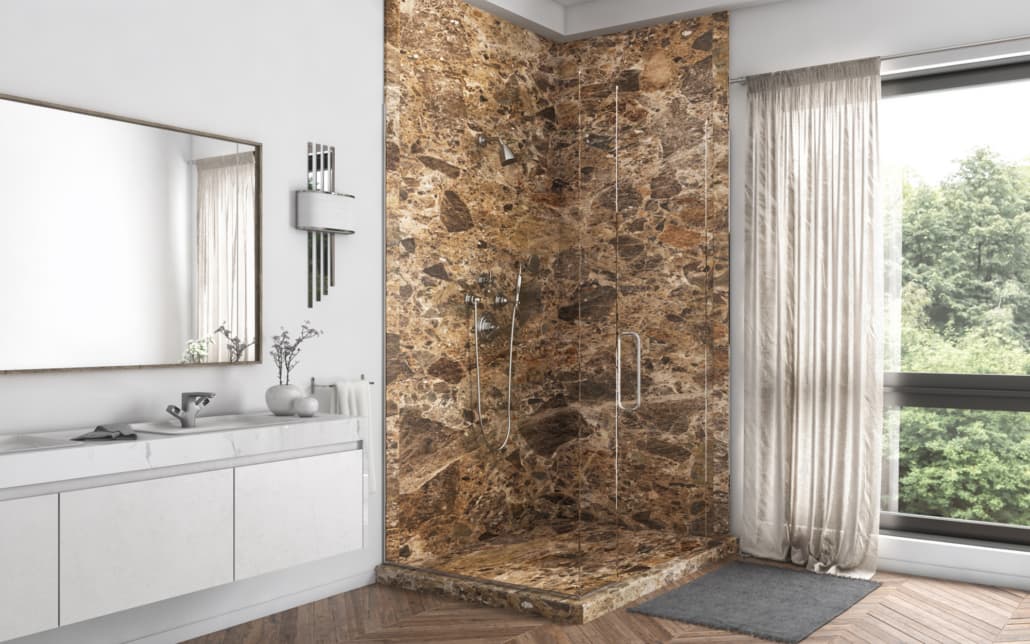
Acrylic and polymer shower wall panel systems address the mold risk at its source rather than treating the symptoms. The mechanism is simple: no grout lines means no moisture pathways.
These panels are installed as continuous surfaces: large sheets that cover the full height of the shower wall without interruption. The only seams are where panels meet, and these are sealed with a flexible, mold-resistant sealant designed for high-moisture environments. The panel surface itself is non-porous and does not support mold growth.
The Result
The primary route by which moisture enters your bathroom walls is permanently closed. For King County homeowners, this means the end of recurring mold battles.
The Cost Comparison: Prevention vs. Remediation
Cost of Mold Remediation in King County
A bathroom remodel with acrylic or polymer panel systems, which eliminates the grout-line moisture pathway, is a one-time investment that addresses the root cause. For most King County homeowners, the math of prevention versus eventual remediation is not close.
What You Can Do Right Now
If you have a tiled shower surround and haven't had it inspected recently, there are practical steps to assess your current risk:
- Press gently on tiles near the base of the shower. Any flexion suggests water damage behind
- Look carefully at caulk lines at the base and corners. Separation or cracking is a water infiltration signal
- Note any musty smell after showering when the bathroom is closed
- Check that your exhaust fan is sized appropriately. An undersized fan is the most common ventilation failure in Seattle bathrooms
Frequently Asked Questions
Schedule a Free Bathroom Assessment
Don't wait for the signs to appear on the surface. By then, the problem is already inside your walls. A free assessment can identify your current risk and show you the options for a permanent fix.